They told me I was done.
That’s the word they use. Done. As if there were a finish line, and I had crossed it, and the crowd was cheering, and now I could go home and pick my life back up exactly where I set it down.
I remember waiting to feel relieved. Everyone around me seemed to be exhaling. The hard part was over, they said. You beat it, they said. Aren’t you so glad?
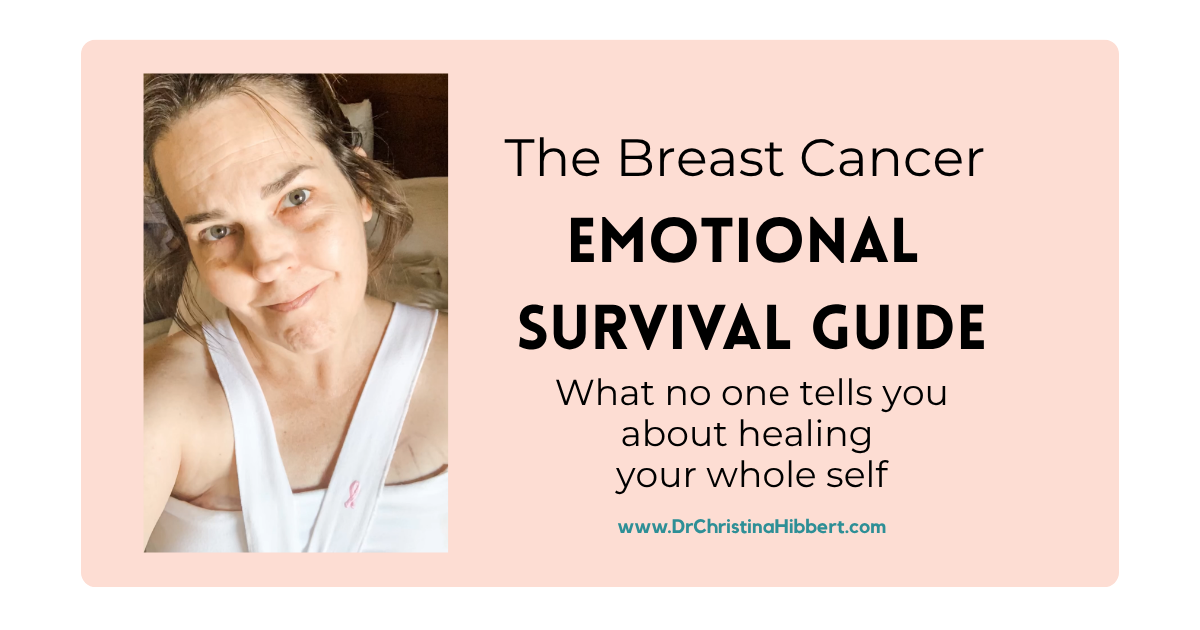
And I stood there in my own body — scarred, numb in places, exhausted in a way sleep didn’t touch — and thought: why do I feel worse now than I did in the middle of it?
If you are somewhere in that strange, quiet after, I want you to hear this before anything else. You are not doing cancer wrong.
The finish line is the starting line of a different race
Surviving cancer and recovering from it are two very different things.
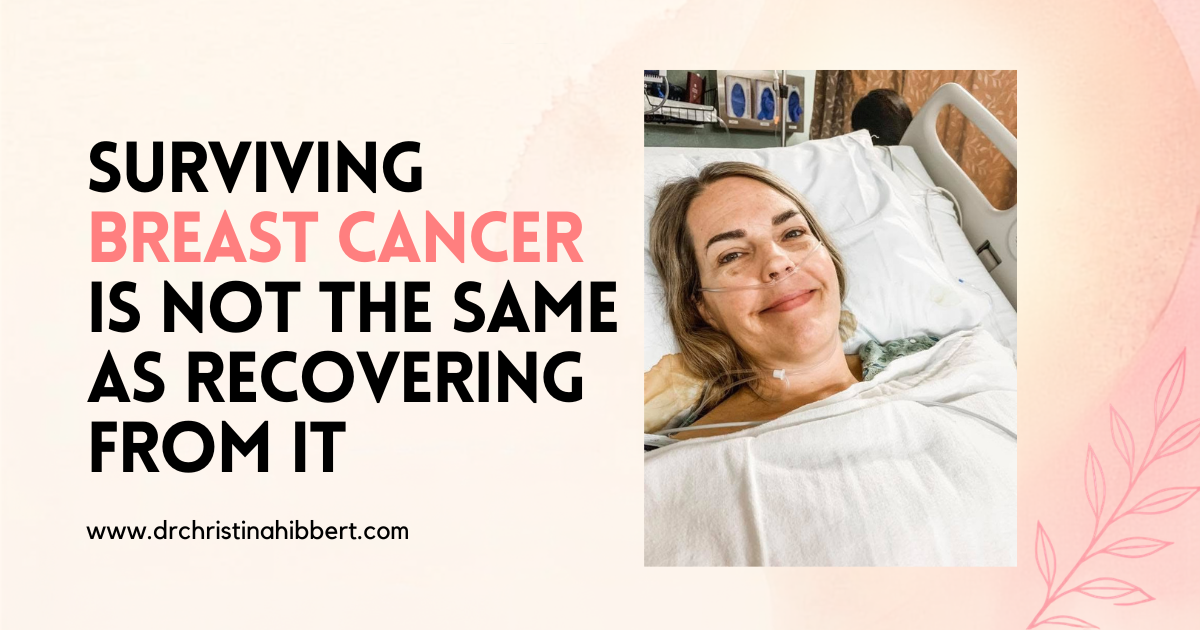
Surviving is what happens in the hospital. It’s measurable. There are scans and margins and counts, and people in scrubs who tell you what comes next. It is brutal, and it is terrifying, and it is also, in a strange way, structured. Someone hands you a schedule. You show up.
Recovery has no schedule. Nobody hands you anything. The appointments thin out, the meal trains stop, the texts slow down, and you are left alone in a body you no longer recognize, with a mind that keeps replaying things you’d rather not replay.
Nobody told me that the finish line is just the starting line for a completely different race.
And here is the part that surprised me most, as a psychologist who has spent her career studying grief and trauma: I did not see it coming either. I had all the language. I had the training. And I still stood in my kitchen months after treatment ended, wondering what was wrong with me.
Nothing was wrong with me. Something had happened to me.
Say it with me: this is trauma
We can cut out the cancer. But we can’t cut out the trauma.
My breast surgeon said that to me, and I have carried it ever since, because it named something no one else would.
A cancer diagnosis doesn’t hit like a single blow. It hits like a portal. You walk through it and everything on the other side is different — your body, your sense of safety, your relationship to time, your understanding of what can happen to you. There is a version of your life that is Before Cancer, B.C., and a version that is After Diagnosis, A.D., and there is no walking back through that door.
That is not weakness.
That is trauma.
And trauma has a shape. It shows up as intrusive thoughts before every follow-up scan. As a jaw clenched so hard it gives you a toothache. As dread that arrives on the anniversary of a date nobody else remembers. As rage that seems to come from nowhere, sitting on top of a grief you haven’t been given permission to feel.
Say it with me: this is trauma.
Not because naming it fixes it. Because naming it stops you from adding shame on top of it.
Grief, even without a death
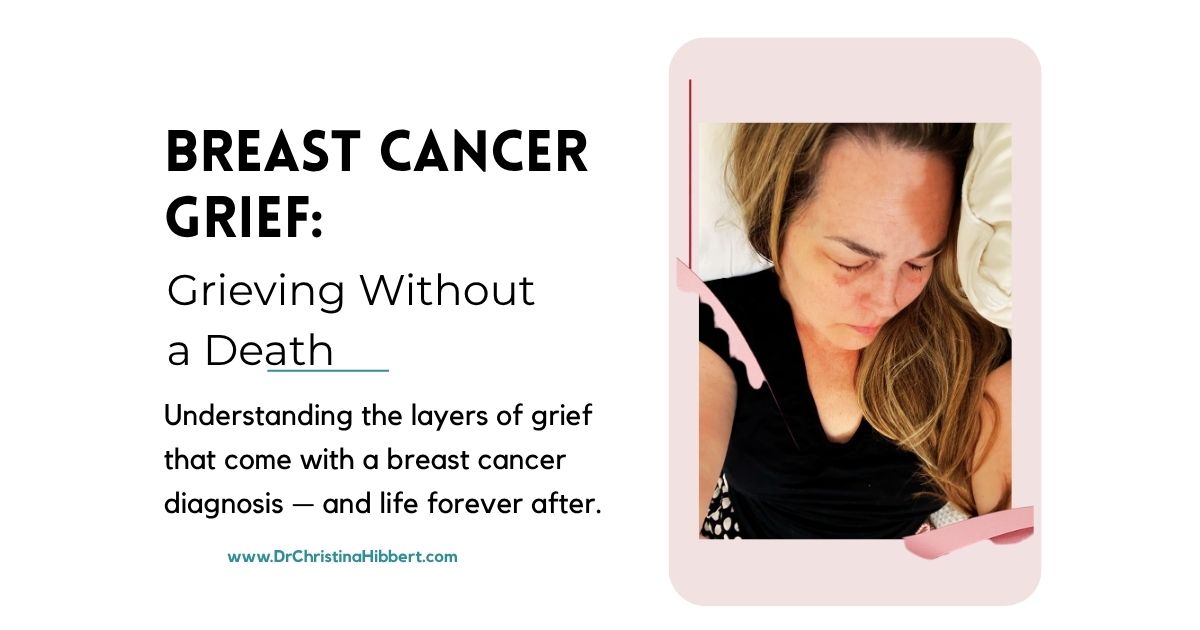
I sat on my back porch swing, in the in-between — after the diagnosis, before the surgery — and the words that arrived weren’t fear or anger. They sounded like this: “this feels like grief.”
I know grief. I lost my little sister Miki when I was eighteen and she was eight. I lost my closest sister, Shannon, when she was 31 and I was 32. Grief and I are old, unwilling acquaintances. So when it turned up again, I recognized its face.
But this grief had no funeral. No one brought a casserole. Because what I was grieving hadn’t died — it was my body as I’d known it, my sense of being someone healthy, my assumption that I had time, the future I had quietly planned. Those are real losses. They deserve real grief.
If you are grieving and you can’t point to a death, you are not being dramatic. You are being accurate.
What actually helped
I want to be careful here, because I am not going to hand you a five-step plan for getting over something you don’t get over. Healing isn’t linear, and I’m still discovering much of this myself.
But one thing helped more than anything else, and it is smaller than you’d expect: I let myself feel what I felt.
Not analyzed it. Not reframed it. Felt it.
When the anger came, I named it out loud — this is the anger, and it feels hot and red and fiery. I let it fill my body instead of clamping it down. I reminded myself: this is just an emotion. You are okay. You can handle this. And then, having let it move through, I could lean back far enough to see that it was not me. It was weather passing through.
The alternative is what I did for a long time, which was to put on the mask. I wore the pink cape. I smiled in the chemo photos. I wore inspiration like armor, and it got me through, and I don’t regret it.
But it wasn’t the same as healing.
Feeling is healing. That’s not a slogan. It’s the mechanism.
A Gentle Reminder
If you are months or years past your last treatment and still tender, still tired, still wondering why this is harder than everyone promised — you are not behind. You are not ungrateful. You are not doing this wrong.
You are not broken. You are wounded. And wounds can heal.
Healing may not mean becoming the person you were before cancer. It may mean becoming someone new.
You are allowed to miss who you were. And you are allowed to welcome who you’ve become. Both can be true.
You don’t have to figure this out today. You don’t have to finish. Just start — and please, don’t ride this roller coaster in the singles line. Tell one person the true answer the next time they ask how you’re doing.
I wrote a whole book about this part — the after.
Reluctant Warrior: A Memoir & Breast Cancer Emotional Survival Guide comes out October 5, 2026. Add your name below for book updates, early access, and first word when it’s available.
About the author
Dr. Christina Hibbert is a clinical psychologist, speaker, mother of six, and the author of Reluctant Warrior: A Memoir & Breast Cancer Emotional Survival Guide.
This piece is companionship and lived experience, not medical or psychological advice. If you’re struggling, please reach out to a physician or therapist who knows your history.